
Florida Multi-Day Weekly Arrest Logs
Florida has no single statewide arrest log. Weekly material comes from sheriff activity reports, dated PDFs, clerk files, and press releases instead. Each office picks its own dates. Each sets its own update pace. Some list bookings; others just summarize events.
Volusia Sheriff district reports run back about two weeks. That is one county, though, not the whole state. The official Volusia Sheriff activity-report page posts dated reports that reach well past a single day of arrests.
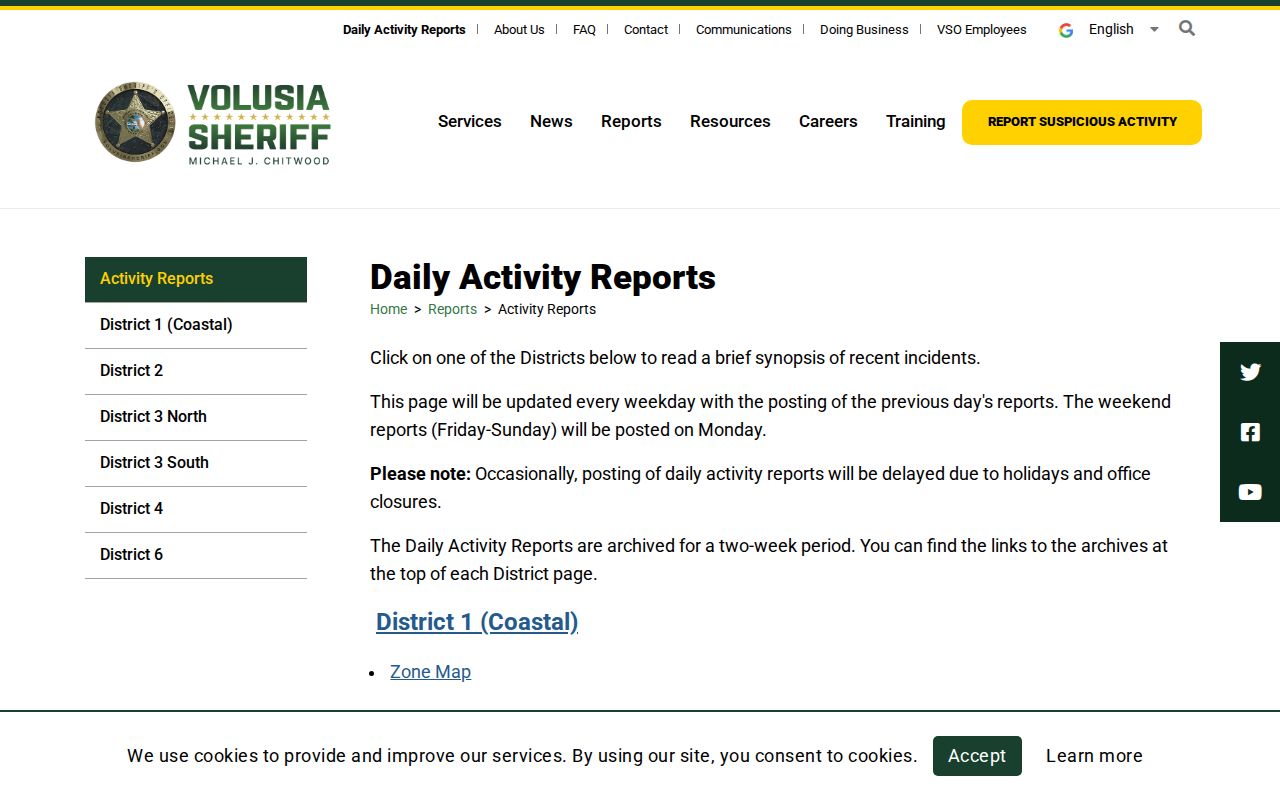
Always check the date on a multi-day arrest report. An incident inside a weekly or district summary may carry a different date than the post itself. It may not even be a jail booking entry.
Florida County Blotter Windows
Every county shapes its blotter its own way. Volusia pairs sheriff activity reports with a clerk inquiry, Baker posts weekly reports beside its inmate search, and Palm Beach lets you filter a booking blotter by date. So a weekly arrest log might be a PDF, a search screen, or an activity report. Corrections and entries rest with the county custodian.
| Official source | Multi-day use | What it does not promise |
|---|---|---|
| Volusia Sheriff activity reports | District reports reaching roughly two weeks in county research. | A full statewide list or a complete jail roster. |
| Baker Sheriff weekly arrest reports | Weekly PDF reports alongside the live inmate-search path. | Every booking in another county or a continuous update. |
| Palm Beach Sheriff booking blotter | Date-filtered booking information and fields such as agency, charges, and bond. | A fixed freshness service level or a permanent public archive. |
| County clerk daily files | Prior dated entries when the clerk keeps a daily inquiry or download route. | Current custody or a long-term archive at the same URL. |
| FDLE annual statistics | Historical county and statewide arrest totals. | Names, booking photos, or a person-level search. |
The official Baker County weekly arrest report index shows one common approach: dated files you open one by one. Read each PDF against its stated period and publication date.
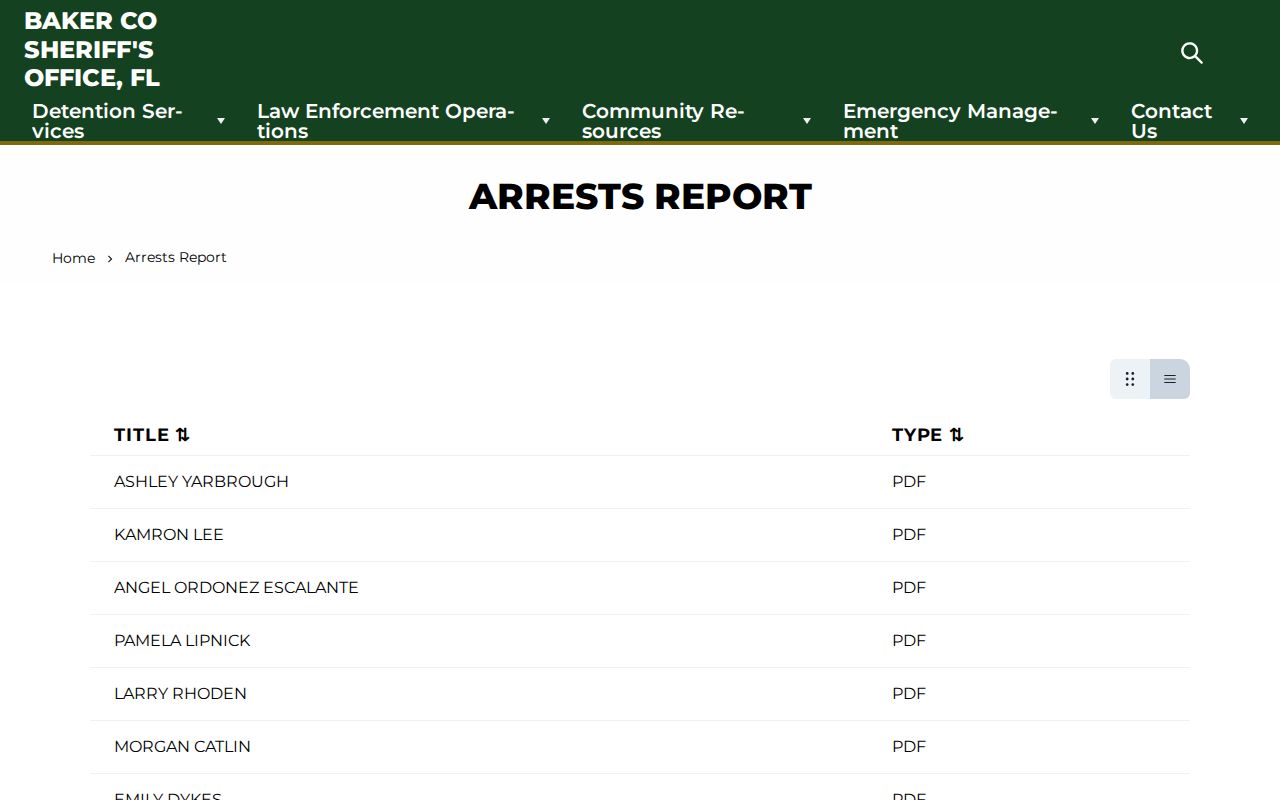
A county blotter entry can be thin or detailed. Some show booking photos, others list only a handful of arrests.
Note: A dated county report shows only what its own publisher chose to include for that reporting window.
Florida Dated Arrest Files
Volusia County’s Clerk runs an arrest and booking inquiry tool with daily downloads and a search option. Entries tend to post the same day or the day after an arrest. For multi-day summaries, turn instead to the sheriff’s activity reports, which cover arrests in broader batches.
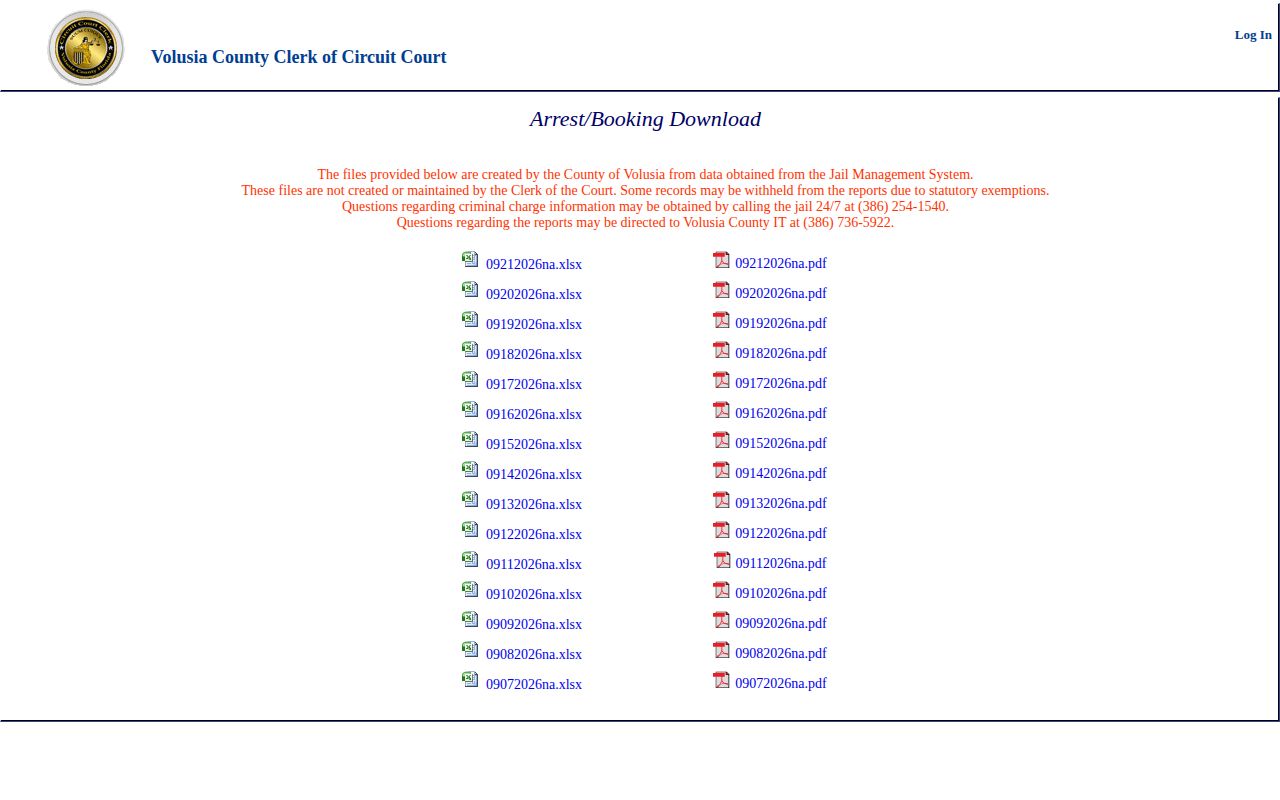
Match two dates on any entry you pull. One shows the arrest or booking date; the other shows when the file was published. If they differ, keep that gap in mind when you ask the clerk or sheriff to confirm what the record means.
Reading Florida Arrest-Log Entries
A blotter entry is brief, never the full case. Expect a name, an arrest or booking date, the agency, and perhaps a short event summary, keeping in mind the post date marks publication rather than the arrest. Operation reports list selected actions, not every booking.
| Record detail | How to read it |
|---|---|
| Event or arrest date | Use the date named by the source; do not substitute the webpage’s update date. |
| Booking or case identifier | Use it to ask the custodian about the matching record; avoid relying on name alone. |
| Charge or offense text | Treat the words as an charge or agency label, not as a finding by a court. |
| Release or custody status | Read it as a point-in-time status; later movement may not appear in an older report. |
| Disposition | Check the clerk or court source for the later case outcome, if one exists. |
Names get misspelled, duplicated, or shared. Check before you assume a match. Verify with a booking number, the arresting agency, and the arrest date whenever the record allows.
How to Find a Florida Blotter
Pick the county and date range first, then choose a source. Florida's County Directory routes you to each local site. Start where the arrest occurred, since that county's sheriff, jail, or clerk holds the official booking material, and request the agency record if no archive exists.
- Set the place and dates. Identify where the booking occurred and the range to check. If the arrest location is unclear, start with the agency named in a release or report.
- Choose the matching official channel. Use a sheriff activity page or weekly report for its dated summaries, a clerk inquiry for court or booking files, and a jail roster for current custody.
- Read the source labels. Note whether the source says arrest, booking, activity, or case data. Record the entry date separately from the page’s posted or updated date.
- Ask for an existing record when the web window ends. Give the custodian the county, agency, date range, booking or incident number if known, and the specific record sought.
For a new booking, the Florida Daily Arrest Report breaks down current county views of who was arrested. It is the quickest starting point for fresh Florida recent arrests.
Note: Use arrest date, booking date, and page-posted date as separate facts when comparing entries.
Florida News Arrest Blotters
News outlets add context a roster rarely holds. That includes agency statements, details of an operation, later court updates, and corrections. Coverage follows events, though. A story archive can never replace a county booking log. Florida outlets include the Tampa Bay Times, WFLA, WFTV, News4JAX, WSVN, Local 10, and WINK News. Treat these as secondary even when an official is quoted. One story may cover a single event and skip the county's bookings entirely. Spot a factual error or a legal order. Use the newsroom's current contact or correction route.
Florida Weekend Arrest Reports
County booking can continue at night, on weekends, and on holidays while public reports follow another schedule. A list may post on the next business day, a sheriff may publish a Monday roundup, and news may cover selected events. This pattern does not prove a statewide rise in weekend arrests.
Read dates with care. A report's posting date is not always the arrest date, and a holiday release may fold several days into one summary. Always check the date field and scope before you count anything.
Need to know who is in custody right now? Use a county jail roster. For a dated account of an arrest, compare sheriff records, clerk records, and press coverage, since each may reflect a different stage.
Note: Delayed publication is a timing pattern, not evidence of a statewide rise in weekend arrests.
Florida Highway Patrol Reports
The Florida Highway Patrol takes a different approach to public records. FHP posts news releases and event reports on its site. What it does not publish is a complete statewide arrest log. Releases are tied to events. One may cover a special operation. Another may describe a notable incident. The agency's live traffic and roadway interface sits apart from all of this. That feed tracks incidents, not people, so it won't function as a booking source for named individuals.
Here is how custody actually works after a trooper makes an arrest. FHP hands the person to the county sheriff. The sheriff's jail then handles booking. So the county is where you confirm who is in custody. Keep the record types straight, too. An enforcement release reports what FHP says happened. A county booking entry shows intake. A court record may later show a filed case. The agency name and arrest location help route a request to the right county custodian. FHP's own arrest-authority material walks through this state-to-county path.
Florida Arrest Statistics and Names
Florida's FDLE Uniform Crime Reporting archive offers a different type of history. The FDLE annual-report archive holds statewide and county-level totals, not names. It works well for trend and context questions. The current archive page covers annual reports. They run from 2000 through 2020. A county or yearly count cannot tell you whether one person was arrested.
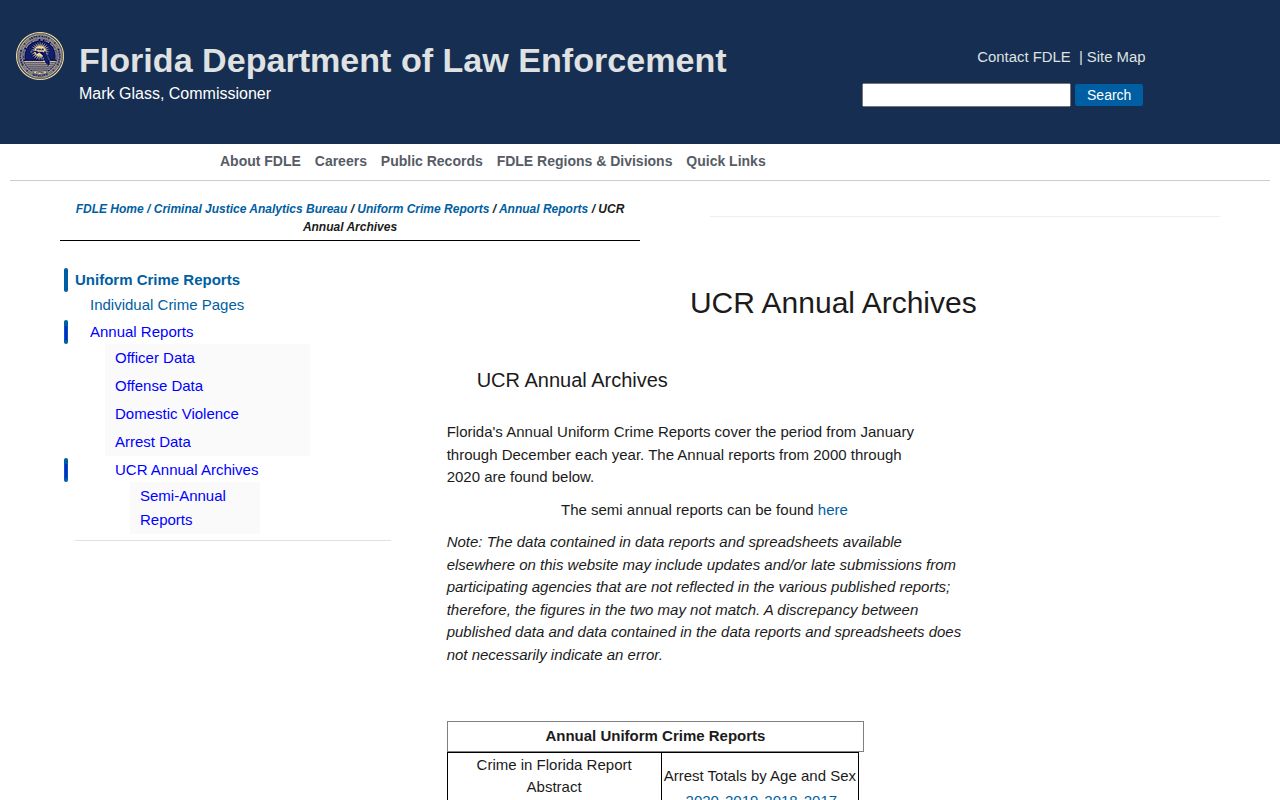
Counting moves slower than booking. A custody status can change an online entry today, while published totals stay fixed to their reporting period. For aggregate history, use FDLE; for records tied to a person, use the county custodian.
Note: FDLE annual counts describe reported periods and cannot establish whether a named person was arrested.
Florida Arrest Record Retention
A blotter's short online window says nothing about how long the record itself survives. Florida's Department of State GS2 schedule for law enforcement, correctional, and related records covers booking records, commitment and release lists, and jail docket books. Docket books are permanent. Booking records and commitment or release lists generally last through one anniversary year after release. Those are retention rules. They promise nothing about a link or image staying online. A private vendor can drop an old result. The official custodian may still hold the record. Some counties keep things longer. Special rules can also apply. When a multi-day log stops short of the date you need, ask the sheriff, jail, or clerk for the actual record series instead of trusting a cached page or private archive.
Florida Historical Arrest Archives
The State Archives of Florida keeps state and local records plus selected historic images. Florida Memory holds curated collections, not a modern booking-photo or name search. Search by county or agency, period, and terms. Useful terms include jail, booking, inmate register, commitment, or release. A county name alone may pull broad records rather than one person's file.
Requesting from an agency works better with specifics. Name the custodian, county, date range, record type, and format you want. A person's name or booking number helps only when relevant. Ask separately for a booking entry, arrest affidavit, incident report, release record, or disposition. If denied, request the non-exempt portions and the legal basis. Florida sets no single completion deadline for all requests. Authorized copy or service costs may still apply.
Remote archival help needs the county or agency. It also wants approximate dates and any known collection or series. Staff availability limits reference work. It may run in timed increments and does not promise a full surname search. Large duplication orders can take more than a day.
Statewide source routing has its own hub. See the Florida recent arrests home page. It also draws the line between arrests, court cases, and correctional custody. A log freezes one moment. The custodian or court record shows what happened next.
Note: Retention schedules apply to agency records, not the continued availability of each public webpage or screenshot.