
Finding Florida Recent Arrests
No single state roster lists every new Florida arrest. City police, sheriff's deputies, and the Florida Highway Patrol all make arrests. But county booking staff create the custody entry, so the county where the booking happened matters most. Someone can land in a nearby county jail. He can also be released quickly or moved after booking. Start with the county where the event took place, then widen to neighboring counties if nothing matches.
A booking is intake, plain and simple. Staff log identity details, the arresting agency, the charge, and each custody step. A mugshot may be taken there too. Every county decides what goes online, so a live list is never a full record of everyone arrested in Florida. A blank result might mean the person was released, the record has not loaded yet, a different county holds him, or a legal limit applies.
Separate three questions when you search Florida recent arrests. Who was booked? Who is still in custody? What happened in court? County rosters answer the first two in part. Court records pick up the case after that. Florida Department of Corrections (FDC) records cover state sentences and supervision. Each layer uses its own identifiers and updates on its own schedule.
How Florida Arrest Rosters Differ
Florida has no single arrest feed. Each county sheriff, jail, clerk, or records office picks what to publish. It also sets how long a web view stays up. Some counties run vendor search forms. Others post daily downloads, activity reports, or selected news releases. The statewide County Directory points to those local sources. Its links never promise a current or complete roster.
| Statewide source type | What it may show | Limit to check |
|---|---|---|
| Current custody roster | People held at the time of the search, sometimes with booking details or a photo. | A person released or transferred may disappear even if booked that day. |
| Dated booking inquiry | Bookings filed for a day or selected date range, sometimes as a download. | A daily file can lag a live jail view and may not include every county arrest. |
| Activity or blotter report | Selected events, weekly reports, or enforcement summaries. | A report is not necessarily a complete person-by-person roster. |
| Agency news page | Notable cases, operations, or arrests selected for public release. | News coverage explains an event; it does not replace the booking record. |
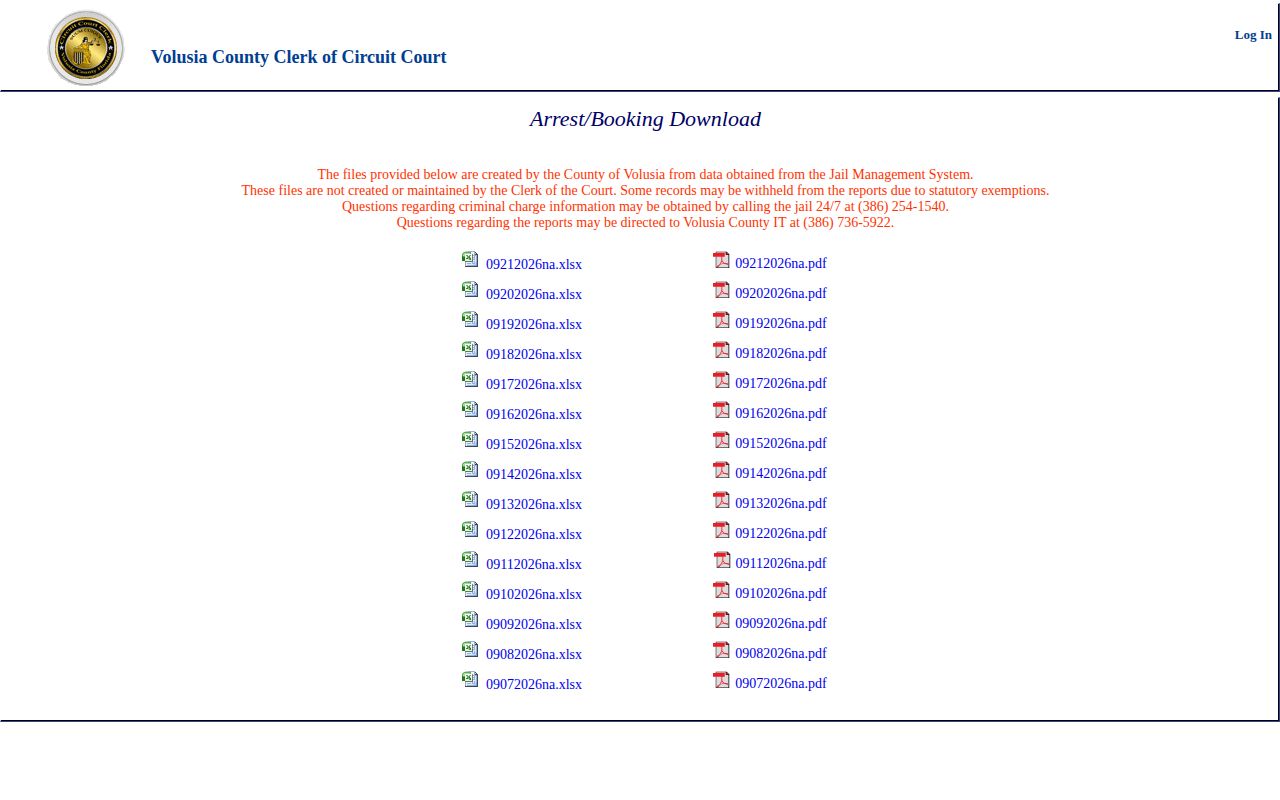
Hillsborough shows one approach. Its online interface can retain some bookings after release. Volusia takes another path, with a clerk inquiry built on dated search and download files. Neither system is a statewide standard. Other counties may show only current custody, selected arrests, or no web results at all. A blank page can mean a release. It can also mean a different booking county, delayed data, an exemption, or simply a publishing choice. Ask the records custodian directly when the official site does not answer your question.
Search Florida Recent Arrests by County
Match the source to the event and the custody stage. A county roster shows people held right now. A booking feed may keep names briefly after release. A multi-day activity report can summarize several events. Still, it is not a complete person-level log. Any careful lookup of Florida recent arrests should keep the agency source and the record date tied to the result.
- Identify the county where the arrest likely happened. If a state trooper made the arrest, check the county jail that received the person.
- Open that county in the Florida County Directory and follow its official sheriff, jail, corrections, or clerk link.
- Search the name with a second identifier when the official portal offers one. Common names can return more than one person.
- Read the page label and date. Distinguish current custody from a recent booking or a released-person archive.
- If a new booking is missing, contact the county records unit or ask for the existing booking entry and photo. Use the court clerk for a case outcome.
A fresh booking takes time to reach a public search. The person may walk free before you check a roster. A transfer can also move custody to another county. Families tracking one known person over time can use Florida's VINE program. It offers custody searches plus release and transfer alerts. It supplements the county record rather than replacing it.
A blank search proves nothing about whether an arrest occurred. The source might cover current custody only. The person might sit in another county. The record could also be delayed, withheld, sealed, or outside the portal's date range.
Florida Booking Photos and Mugshots
A booking photo is one part of a county intake record. Intake may include identity checks, fingerprints, a photograph, property, and a custody log. Florida law does not force every sheriff to post each mugshot online. Some counties show a photo when one exists. Others display text fields or skip the image. Some require a separate records request. A missing thumbnail may just be a display choice or system limit. That is not proof that no photo was taken.
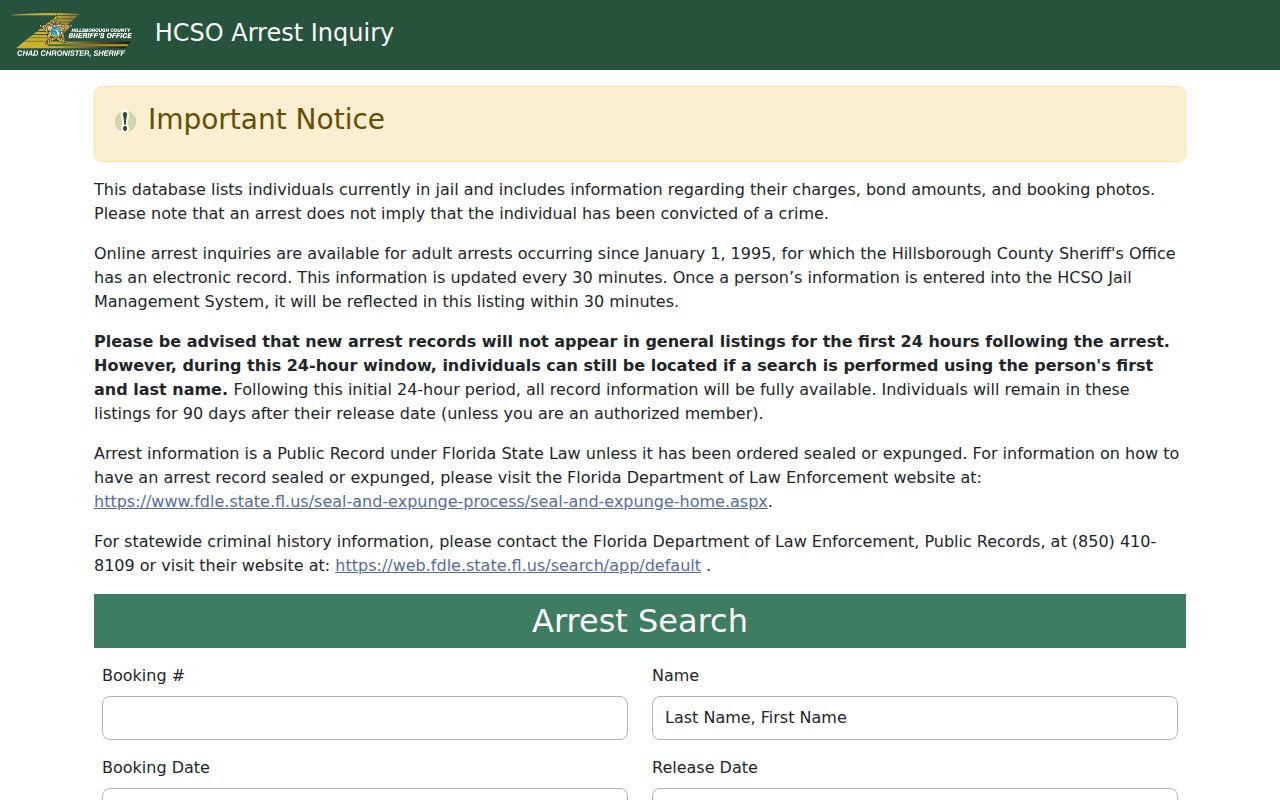
The Hillsborough County Sheriff's Arrest Inquiry is one official interface. It can display a booking photo when available. Its search page shows query fields, not a gallery of people. Check the county entry and its date before treating any image or name as current.
A dated booking file works differently than a live custody page. The Volusia County Clerk arrest and booking inquiry offers a daily download. It also provides a search route. That helps with a recent event once a live roster changes after release. It is not a continuously refreshed statewide feed.
Private sites often copy county arrest entries and booking photos. Those copies can lag, repeat, or sit unchanged after a case closes. Start with the county's own sources instead. If a secondary listing helps, treat it as a lead. Check current status with the sheriff, clerk, or court.
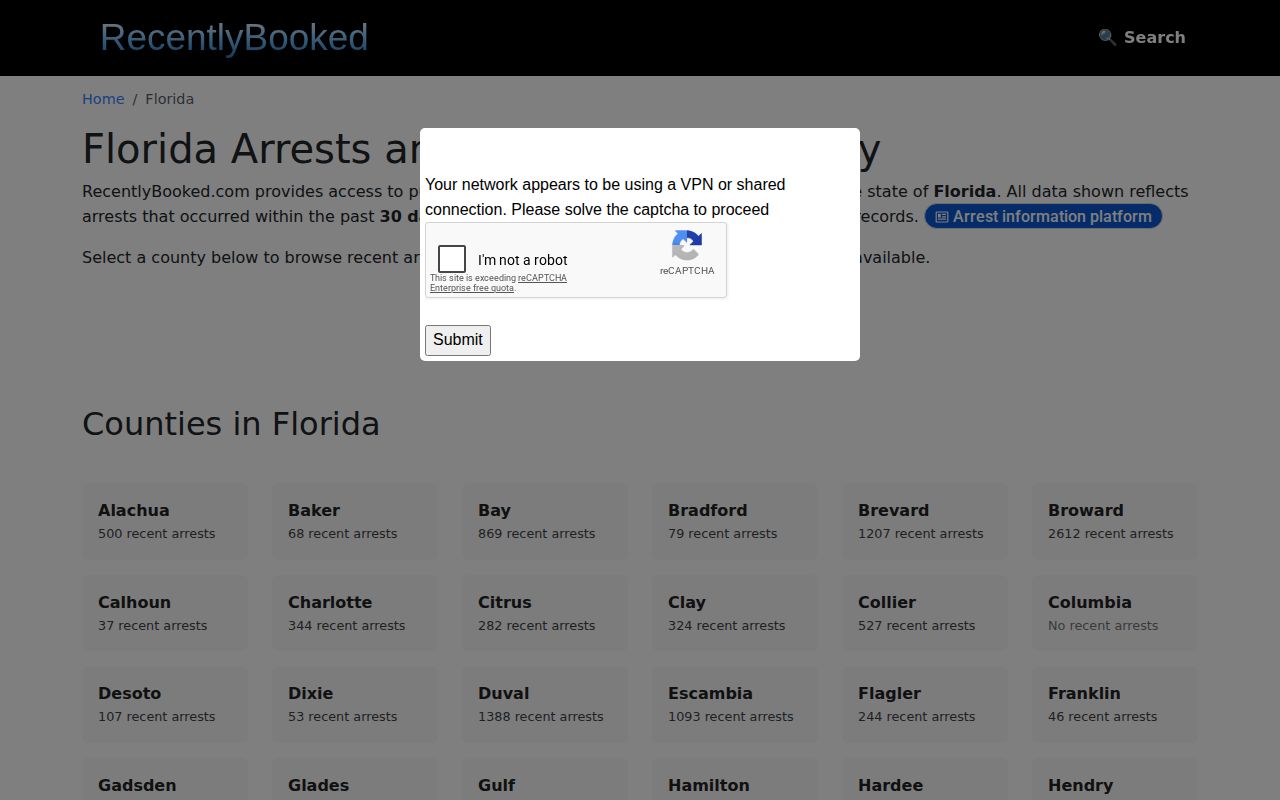
The RecentlyBooked Florida section is one such unofficial hub. It points to county material rather than serving as a live statewide custody source. Coverage may span only a recent window, and update timing varies by county.
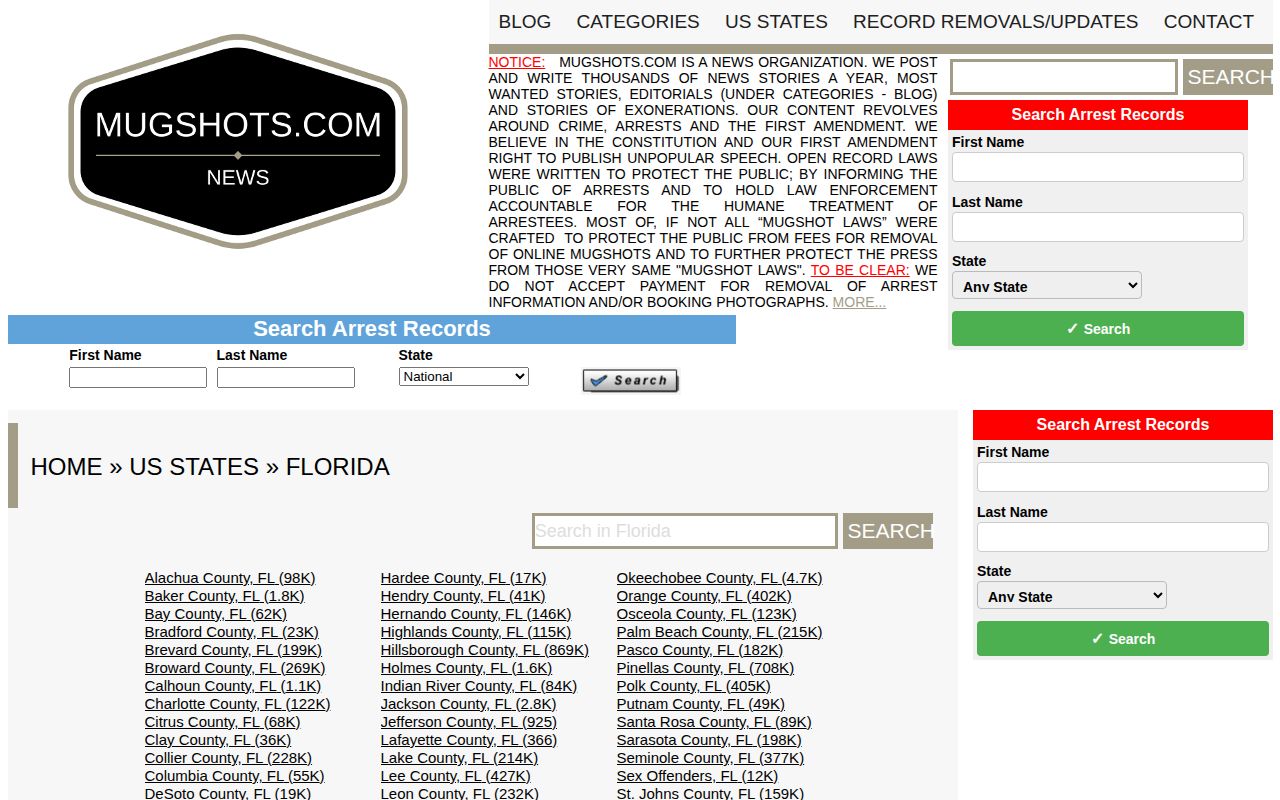
The Mugshots.com Florida section is another private index. Its state landing page offers no promise that any listed image is current or complete.
Busted Newspaper’s Florida section and Florida.Arrests.org organize similar secondary county coverage. Mugshots.zone leans on county pages too. But it keeps no stable Florida index. The site root is not a statewide arrest search. None of these stands in for the agency record. Each publisher sets its own correction rules. A voluntary takedown request has nothing to do with Florida law.
Newsrooms across Florida publish selected incidents and case updates, not full booking lists. Their correction routes address factual errors or legal orders. Accurate reporting stays up. For anything that matters, the county source remains the record to verify.
What a Florida Booking Record Shows
A county booking record can hold a lot of detail. Expect a booking number, identity information, the arresting agency, the booking date, charges as entered, bond details, custody status, and a photo if the county releases one. No single statewide form governs these systems. A public page may show only part of the record. Ask for the precise item rather than assuming every field appears in the roster.
| Record layer | Possible fields | What it means |
|---|---|---|
| County booking entry | Name, booking number, booking date/time, arresting agency, charge at booking, bond, custody or release status, photo if available. | Local intake and custody information. Fields vary by county and exemptions. |
| Florida Department of Corrections | Name, DC number, aliases, custody or supervision status, location, and photo when available. | State sentence or supervision record, not the county arrest feed. |
| Court case | Case number, filings, docket events, and disposition when posted. | Case progress and outcome; the county clerk remains the authoritative source for its case. |
A Florida booking record lists the charge logged when the person was arrested. That entry can change. Prosecutors may file different charges later, and courts can correct the record, so the clerk handling the case is the place to confirm an outcome.
Custody status shapes where a name shows up. Someone booked minutes ago may land in a new-arrest feed. A person still in custody stays on the current jail roster. Released people drop off that roster, yet their booking record still exists. A state prison sentence moves the person into the FDC offender search, while federal custody shows up in the Bureau of Prisons locator instead.
How to Request Florida Arrest Records
Florida’s public-records law opens access to existing, non-exempt agency records. It does not force an agency to build a new statewide database, assemble a photo collage, or answer an open-ended research question. A requester generally need not give a reason. The custodian should respond promptly. The route works whether or not the county posts an online roster.
Send a focused request to the office that actually holds the record. Sheriff and jail records units handle county booking entries and photos. FHP or the proper FLHSMV custodian handles an agency report. The court clerk holds dockets and dispositions, and FDC covers state-custody records. These offices do not all hold the same document.
- Name the county or agency and give the incident or booking date range. Add a legal name or booking number if known.
- Ask for each existing item by type: booking entry, booking photo, arrest report, probable-cause affidavit, release or commitment record, or court disposition.
- Ask for an electronic copy when suitable and request the statutory basis for any withheld or redacted part.
- Ask for a cost estimate before extensive staff work. Keep the request, acknowledgment, estimate, invoice, and final response.
Chapter 119 permits copy charges plus actual staff time for extensive use or special service. No single statewide deadline applies to every request. A custodian may need to redact protected material. Or the custodian may state plainly that the agency lacks the item. When a portal misses a record, a records request is a practical fallback. It is not a promise that a protected record gets released.
FHP traffic-crash reports follow their own path under Florida Statutes §316.066. The first 60 days carry special access limits. Portal fees or copy charges reach those crash records as well. Do not treat those crash-report rules as the fee or deadline for a routine FHP arrest record.
Florida Mugshot Publication Law
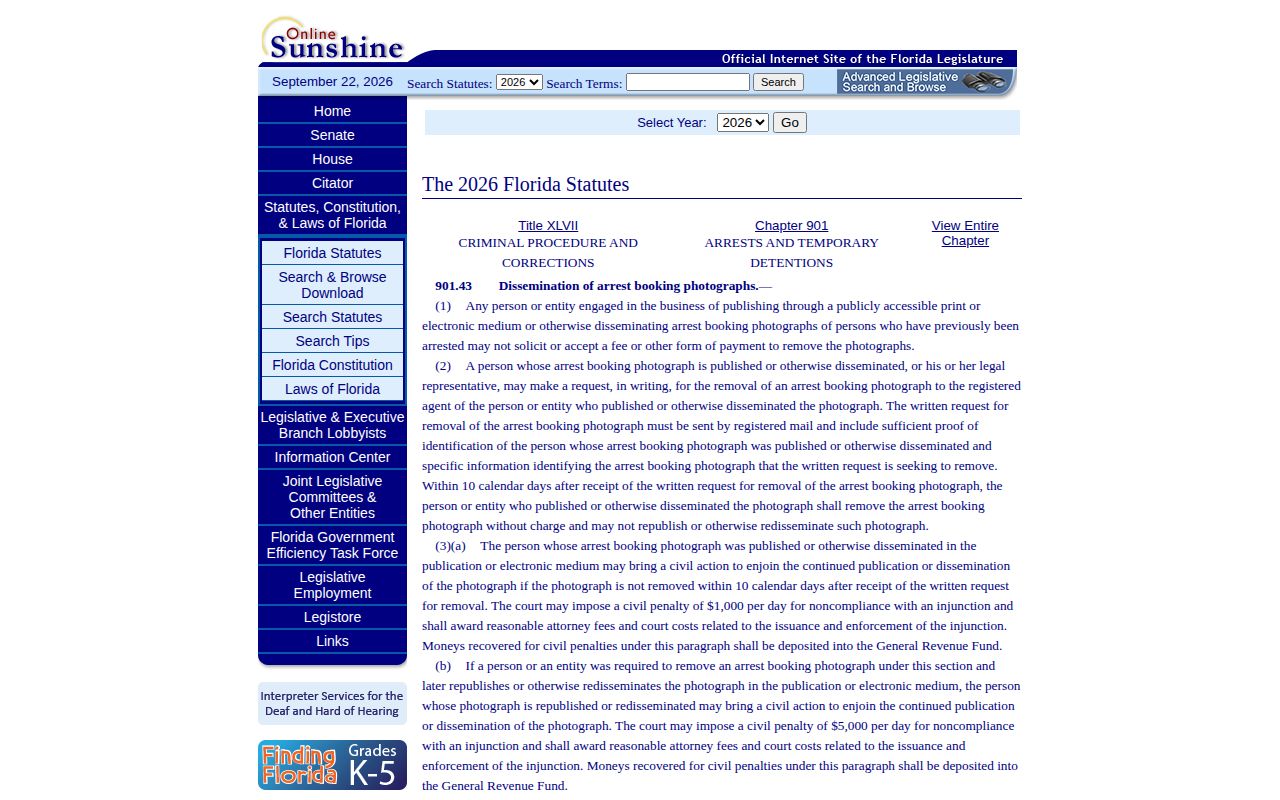
Florida Statutes §901.43 aims at covered commercial booking-photo publishers and pay-to-remove conduct. It is not a blanket rule that every arrest photo is unlawful, nor a duty for agencies to purge public records from their own systems. Someone shown in a covered publisher's photo may request removal in writing. A legal representative may too. The request goes to the publisher's registered agent. Send it by registered mail. The request needs enough identifying detail for the publisher to locate the image. Removal must follow within ten calendar days at no charge. The publisher may not republish it.
Florida’s free statutory removal path points at covered publishers only. It does not order a county jail to destroy its record. Nor does it wipe every copy or search-engine result at once.
Florida's mugshot law targets a specific kind of publisher. It applies to sites that solicit or accept payment for removal, or that run on commercial booking-photo publication for financial gain. A covered refusal or republication counts as an unfair and deceptive trade practice. Courts can order remedies too. Whether a publisher falls within the law depends on its conduct and its business model.
Sealing or expungement follows a separate path after an arrest. A court order and an online copy differ. FDLE cannot force a private website to delete its copy. An automatic seal does not require every criminal-justice agency to destroy its operational records. Eligibility limits, juvenile rules, and free publisher policies are explained in depth on Public Arrest Records.
The Legislature first enacted §901.43 in 2017. It took effect July 1, 2018. A 2021 expansion went after commercial business models and republication. The law remains in force today. The official Florida statute text is the controlling source.
The official statute page displays the full text of §901.43. Use it when you want the exact wording.
Florida Warrants and Wanted Searches
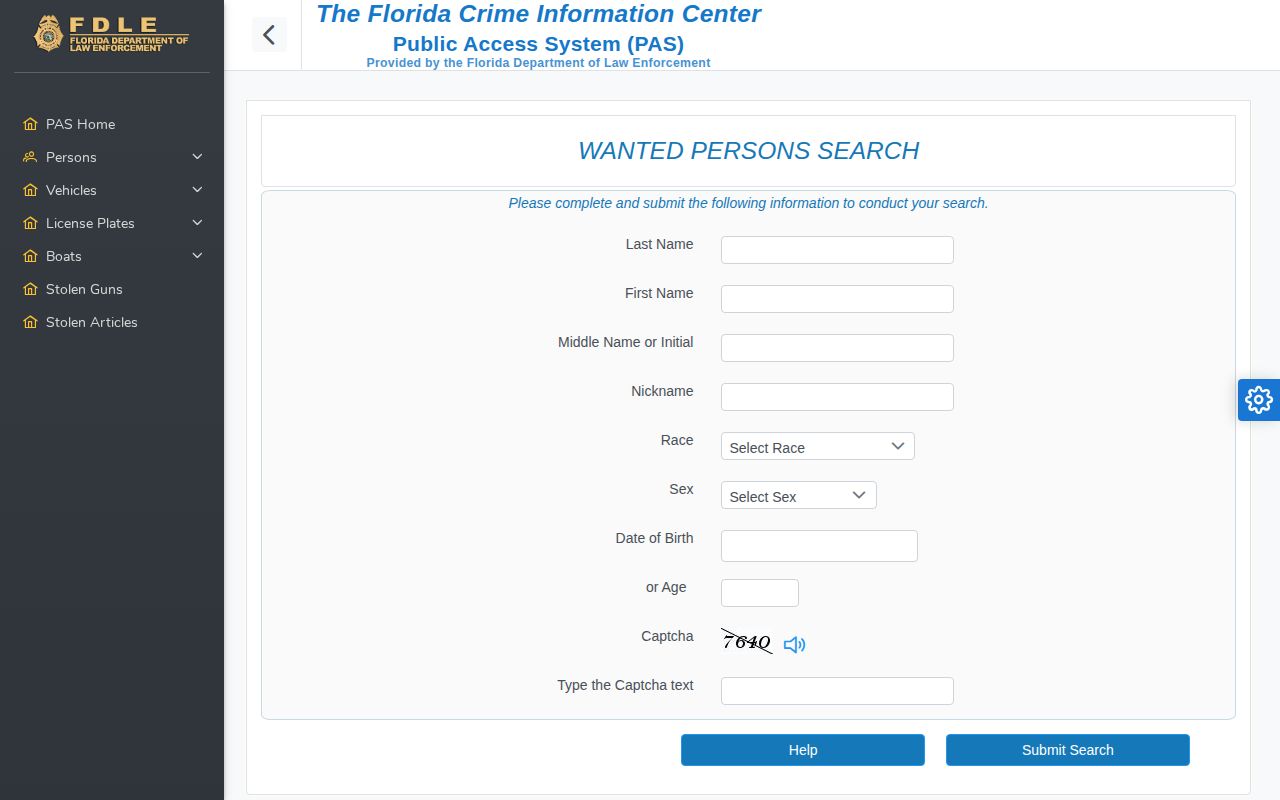
Florida has no single statewide warrant database. The FDLE Public Access System is the state-level wanted-person source. Entries can be stale or incomplete. Some tie to a warrant or supervision matter rather than a new arrest. Confirm any apparent warrant with the court or law-enforcement agency that issued it. The FDLE wanted-person search page appears here without an individual result. A listing is a lead. It points you to the responsible agency. It is never permission to confront a person or attempt an arrest.
The Florida Department of Corrections keeps supervised absconder cases separate from county booking records. Those are supervision cases, not county bookings. The U.S. Marshals Service's Florida district pages describe selected federal fugitive and task-force work across the Northern, Middle, and Southern districts. Together, these systems still miss most county warrants. Find the arrest county in the directory first. Ask its sheriff or court where to verify an active warrant. A warrant authorizes an arrest or other court-ordered action. Anyone worried about a possible warrant should speak with a licensed attorney or the court. If a listed person looks familiar, send a tip to the listed agency. Never approach, follow, detain, or confront anyone.
What Happens After a Florida Arrest
County booking is only the first step. A Florida case can then move through first appearance, a charging decision, court hearings, and a final disposition. An arraignment advises the person of the charge and takes a plea. The disposition is the court's recorded outcome. A bond is a financial or release condition. Its value and availability depend on the charge and the court process. Jail rosters answer a different question.
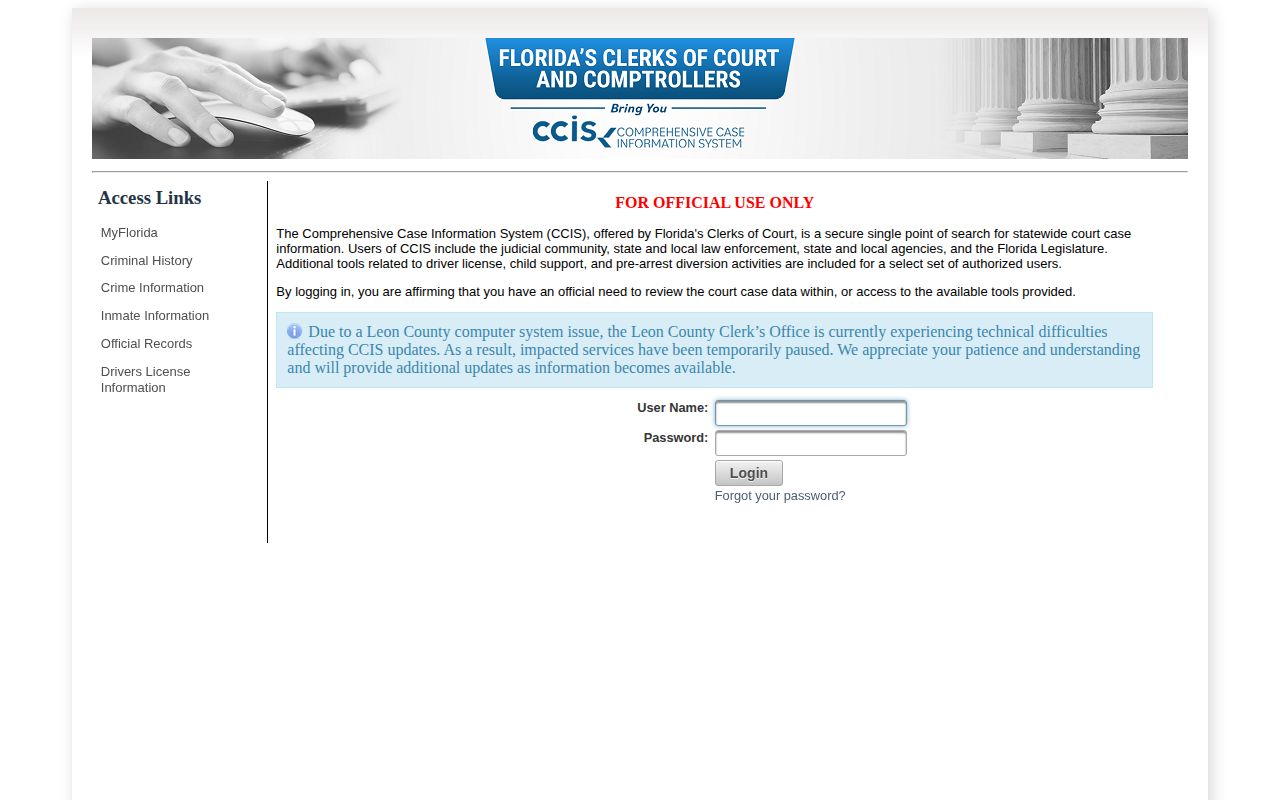
The Clerks' Comprehensive Case Information System, or CCIS, is a statewide discovery point for trial-court case information. Each county clerk system remains the source for its own cases. Online updates can lag. Search by case number when possible. Check the responsible clerk for the final docket. Never match people on a similar name alone, and treat the CCIS landing page as a discovery tool rather than a statewide certificate of judgment.
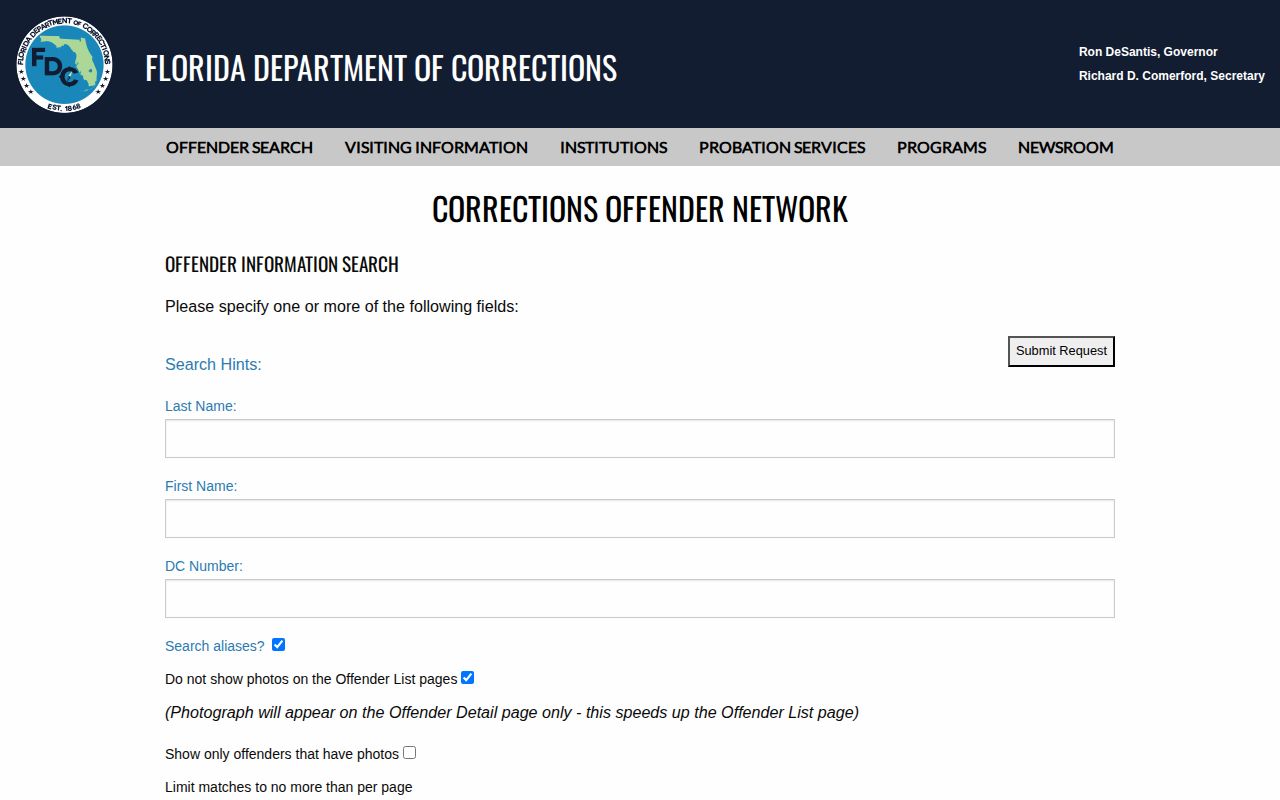
The Florida Department of Corrections search takes a name or a DC number. Results may show aliases, status, location, and a photo. Sentenced offenders and absconder cases sit in separate menus. FDC cautions that its data may not show a person's exact current location or complete history. The FDC offender search is a post-sentencing lookup. It is not a Florida county booking feed.
The Federal Bureau of Prisons locator covers federal custody. It offers no public booking-photo gallery. It is not a county jail roster. Nor does it list every state prisoner. For a county arrest, go back to the sheriff or jail that received the person, since a federal search cannot confirm an entry in a Florida county roster.
A booking photo marks an arrest, while the court file shows how the case later ends.
Older Florida Arrest Records
A search page ages faster than the record behind it. Florida's General Records Schedule GS2 governs how long agencies keep arrest paperwork. Booking records and commitment or release lists generally stay on file. That runs through one anniversary year after release. Jail docket books, though, are permanent. The same schedule says so. None of that promises a web roster or a cached mugshot will still be online that long.
For an older Florida arrest, go back to the original custodian. Ask for the record series and the date of the booking. A county records unit may still hold an arrest record long after its public roster window closed. Be specific in the request. Give the county and the agency. Add the person's name if known, the approximate date, and the type of record. Request each item separately. That might be a booking entry, a photo, or an arrest report. It could also be a commitment or release list, or a court disposition. The agency may no longer hold the item. Ask whether it was transferred elsewhere. Ask whether it was destroyed under a retention schedule.
Retention rules are not the same thing as roster windows. The Florida Department of State's records schedules spell out what agencies must keep and for how long. For genuinely old material, the State Archives of Florida preserves government records and selected historical images. Neither one works like a modern name-and-photo booking search. Plan accordingly.
Archives staff can point you to the right record groups, dates, and containers. A good remote question names the county or agency. It also names the time period and the type of item. Say whether you need a digital copy. A broad surname search may be too large to run. It may simply be impossible. One caution applies to any historical find. A name alone does not prove an old image and a modern roster entry describe the same person.