
Florida Arrest Records Under Chapter 119
For the most part, yes. Florida agencies must let the public inspect or copy records they hold. A law can shield a record from release. Chapter 119 defines public records broadly, and section 119.07 builds the inspection and copying framework. An arrest report can qualify. So can a booking log, a booking photo, or a release record. Still, public status never forces a county to post anything online.
That gap shows up across Florida. One sheriff runs an online roster. It covers people in custody. Another posts a daily report, a limited search tool, or no booking page at all. When a record stays offline, you can request it from the custodian. An exemption can block it. A booking photo held by law enforcement sits inside the same public-records framework. Any exemption tied to the person or the case still applies. Its public status alone does not make a web posting mandatory.
The reliable route to a specific arrest runs through the arresting or booking agency first. After that, check the court record. That shows the case outcome. A Florida Highway Patrol stop may end in a county booking record. The Florida Highway Patrol arrest and records path walks through that handoff.
Florida’s Section 901.43 Photo Rule
Florida Statutes §901.43 targets certain publishers of arrest booking photographs. The person shown in the image may send the request. So may a legal representative. The request goes by registered mail to the publisher's registered agent. It must carry enough identity proof and detail to pinpoint the photo. A covered publisher must then pull the image at no charge. The deadline is ten calendar days. Republishing or redistributing it afterward is prohibited.
The 2017 act behind this law took effect July 1, 2018. Its aim was the pay-to-remove trade, where sites charged people to take down booking photos. A 2021 amendment widened the net. It now covers publishers whose primary business model is commercial booking-photo publication, even with no direct removal fee. It also addressed republication after a valid request. The 2021 amendment text spells out those changes.
The statute has limits. It does not outlaw every booking image, and it does not force a jail to erase records. Nor does it bind every news outlet. The same goes for a casual sharer. Coverage kicks in when the publisher solicits or accepts payment for removal. It also applies when commercial booking-photo publication drives the business.
Miss the deadline, and consequences follow. The subject may seek an injunction. A court can impose a $1,000-per-day civil penalty for violating it. Republication after a required removal can support a separate injunction carrying a $5,000-per-day penalty. Courts must award reasonable attorney fees and costs tied to the injunction. Refusal or republication after a written request also counts as an unfair or deceptive trade practice under chapter 501.
For context, the 2023 case Farrow v. Ritenour dealt with commercial image use under a different statute, §540.08, and left §901.43 standing. The booking-photo statute text spells out the exact conditions. If you use this process, keep good records. Save a copy of the request and proof of delivery. Keep the page address and the image identifier too.
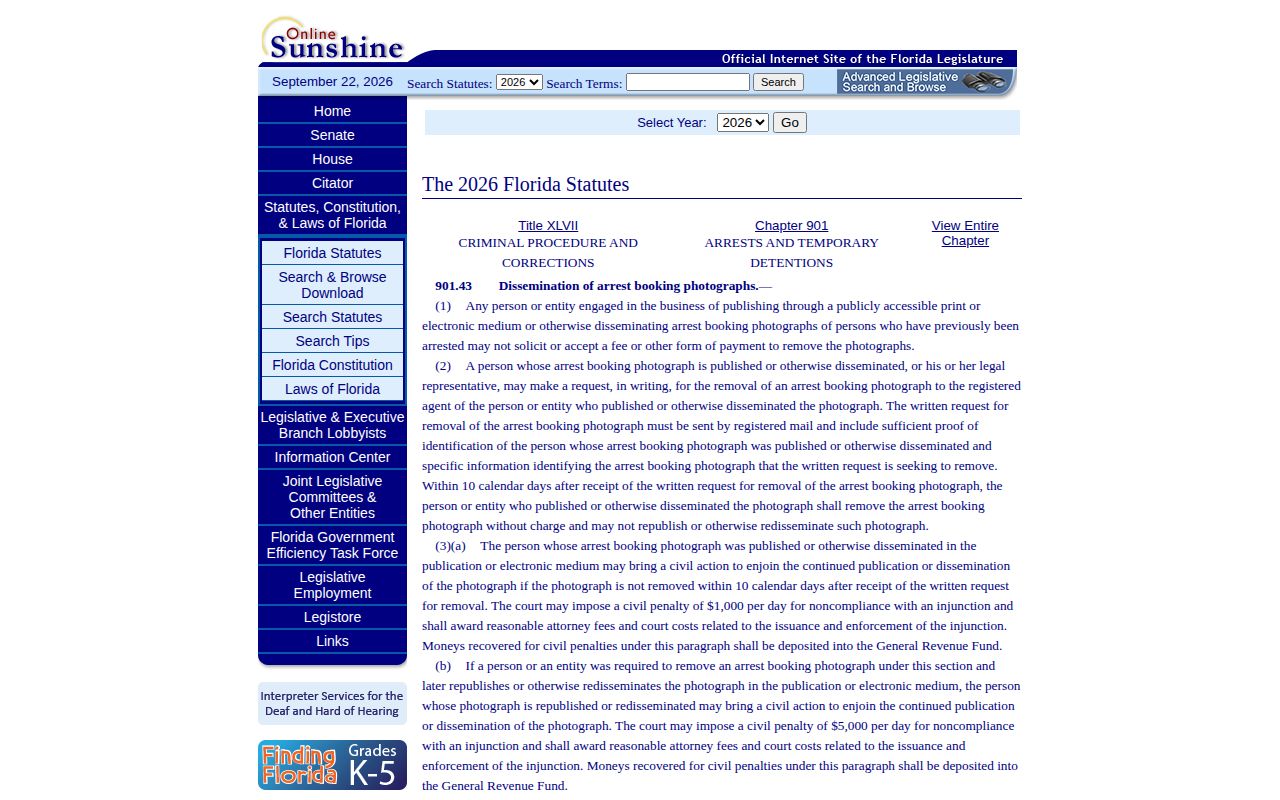
The statute offers a defined, free route for qualifying copies. It is not a general promise that every record or search result will vanish.
Request Existing Florida Arrest Records
A direct request can surface records a county never posts online. Ask the agency that made the arrest, did the booking, or holds the record now. Name the specific item. Do not ask the office to run a statewide search or answer a broad research question. Florida's Attorney General says a reason is generally unnecessary. Writing is optional too. Still, a written request preserves exactly what you asked for. The Attorney General's guidance covers inspection, copying, response, and existing-record limits. A simple written request can follow these steps:
- Name the county or agency and give the person’s name, arrest date or range, and case or booking number if known.
- Identify each existing item: booking entry, photo, arrest report, probable-cause affidavit, release or commitment record, or disposition.
- Ask for an electronic copy when available, and request an estimate before a large search, special service, or extensive redaction effort.
- If part is withheld, ask the custodian to identify the legal exemption and release any nonexempt portion.
- Keep the request, acknowledgment, cost estimate, and response together so the record path can be followed.
Florida sets no single deadline for chapter 119 requests. Each agency answers as promptly as its workload allows. How long a response takes hinges on the volume of records, whether redactions are needed, and how much review the material requires. Asking costs nothing. Copying and special-service fees may still apply under the law. To narrow a search for existing records, the Florida arrest and mugshot source map lists the statewide roster and photo channels worth checking first. The Attorney General’s public-records request guidance also explains how to reach a record and what an agency may charge.
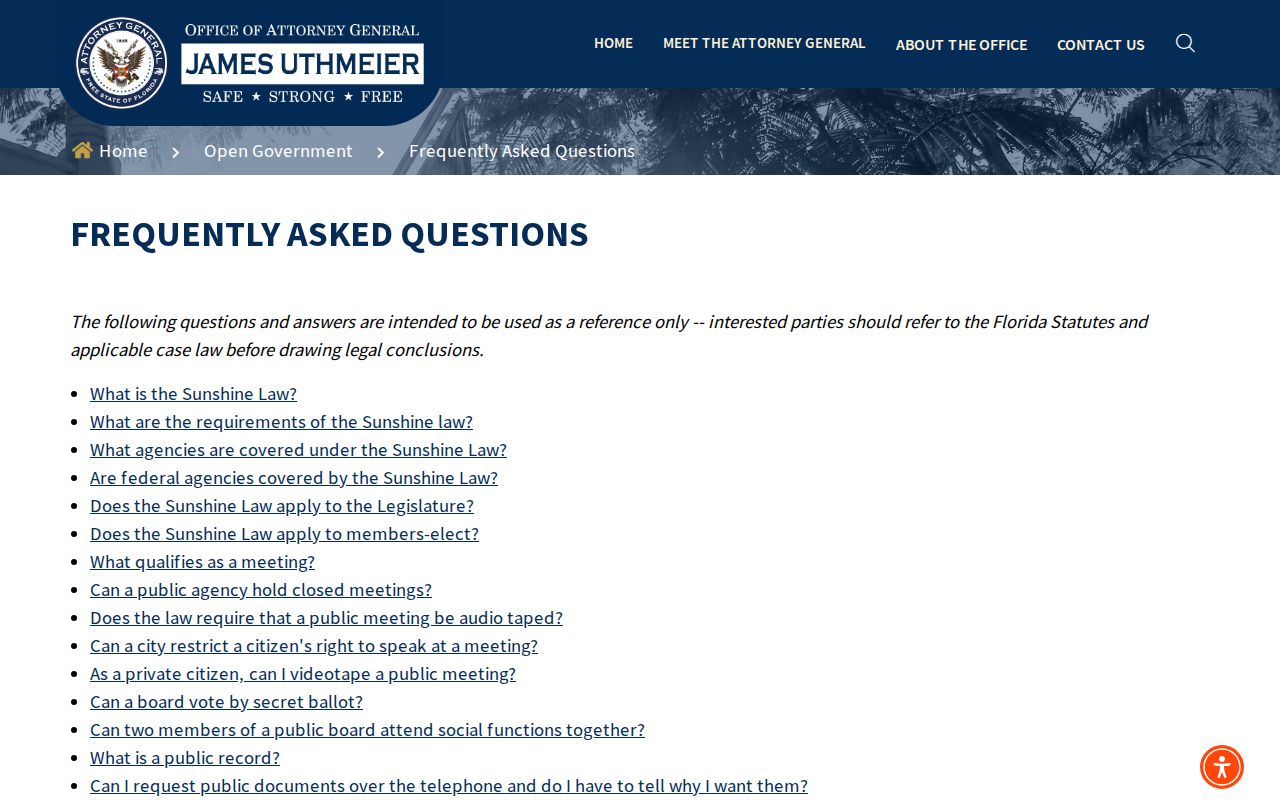
Keep the request narrow so the custodian finds the right incident.
Florida Exemptions and Juvenile Records
Not every page of an investigative file is open in Florida. Some details stay protected. Active-investigation material and victim identifiers are exempt or confidential under state law. So are confidential sources, medical data, and other listed information. The custodian may redact the protected parts and release the remainder of the record. Ask which exemption supports any redaction or denial.
Juvenile records deserve closer care. Chapter 985 generally limits access to information gathered in official juvenile-justice work. But section 985.04 lists exceptions. A juvenile's name, photo, address, offense, and arrest report can become public in specified felony-related situations. That includes custody for an act that would be a felony if committed by an adult. A charge, a finding of commission, or transfer to adult court also qualify. The law's limits still govern each case.
A juvenile booking photo can stay offline even when it is not confidential. The custodian may decline to publish it electronically. That choice alone does not block access under chapter 119. A missing name or photo may reflect a publication choice. It may also reflect an exemption, a sealed record, or an agency holding nothing. It does not mean no arrest occurred.
Note: When a custodian withholds or redacts a record, keep the response and the cited statute before seeking another source.
Florida Sealing and Expungement Paths
Sealing and expungement are court and criminal-history processes. They differ from asking a private publisher to delete a photo. A sealed record closes ordinary public access. It remains maintained under legal limits. An expungement order directs criminal-justice agencies to destroy or obliterate covered records. FDLE still keeps a confidential copy. Neither process reaches every copy held by a separate private site.
Court-ordered relief begins at FDLE. A person applies for a Certificate of Eligibility, which requires a nonrefundable $75 processing fee. That certificate merely permits a petition. It seals nothing by itself, and the court decides whether relief is granted.
Eligibility depends on case outcome, prior history, and supervision. Offense exclusions and other statutory rules also apply. Expungement may follow no charge filed, dismissal, nolle prosequi, acquittal, or a not-guilty result. One path is administrative. It covers an arrest that was contrary to law or made by mistake. Check the agency record and court disposition first.
The FDLE seal-and-expunge process distinguishes administrative relief from a court petition. Keep every supporting order. The record holder and the order's terms determine what changes.
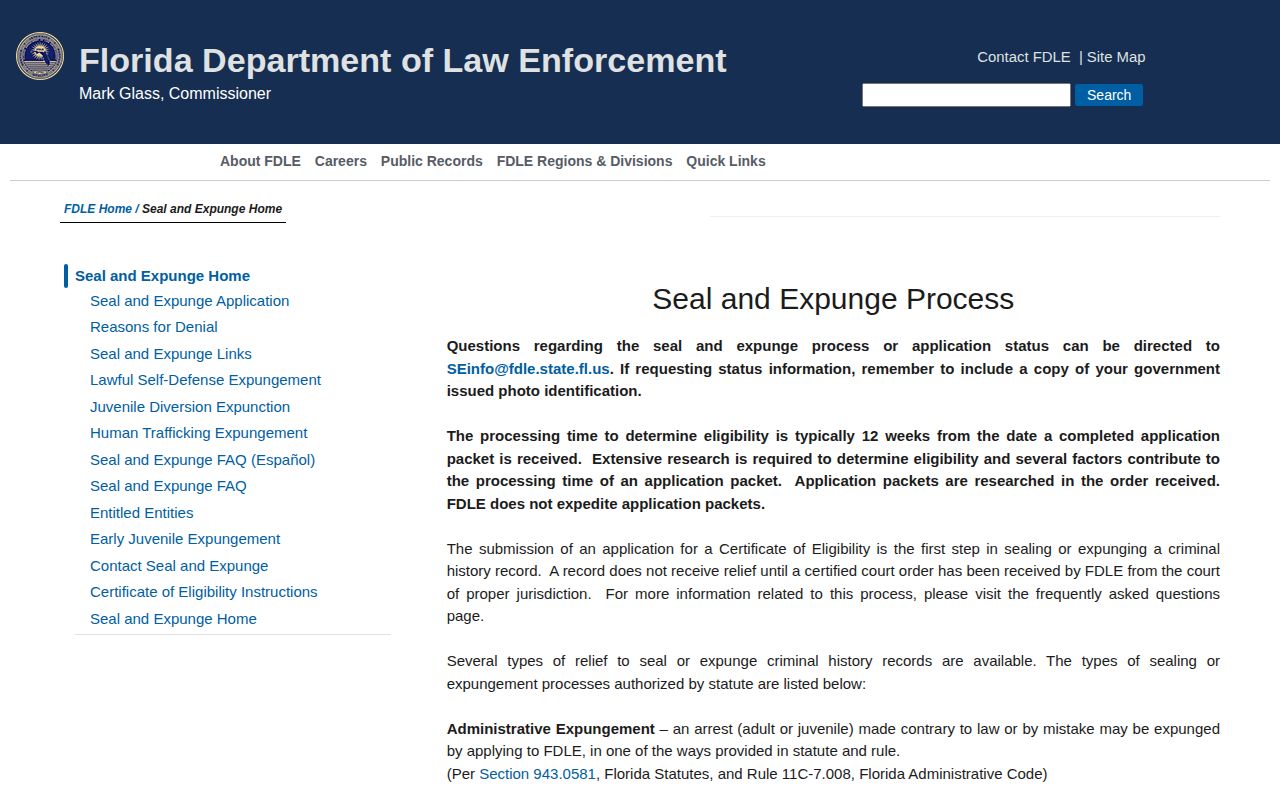
Save the certified disposition and court orders early. The order's terms and the record holder decide what actually changes.
Florida Automatic Sealing and Local Copies
Florida adds automatic sealing under §943.0595 for qualifying records. The statute covers cases with no charging document. It also covers all charges dismissed or nolle prosequi, or a not-guilty verdict or acquittal on every count. Some offense categories and dispositions stay excluded. Once the law's conditions are met, the clerk sends a certified disposition to FDLE. FDLE seals the criminal-history record. The clerk then makes the related court record confidential and exempt.
Qualifying automatic seals have no limit. The law still draws a boundary. The process does not force other criminal-justice agencies to seal, surrender, or destroy their own copies. Those agencies keep maintaining records. The laws that govern them still apply. The §943.0595 text spells out the disposition conditions and the clerk-to-FDLE steps.
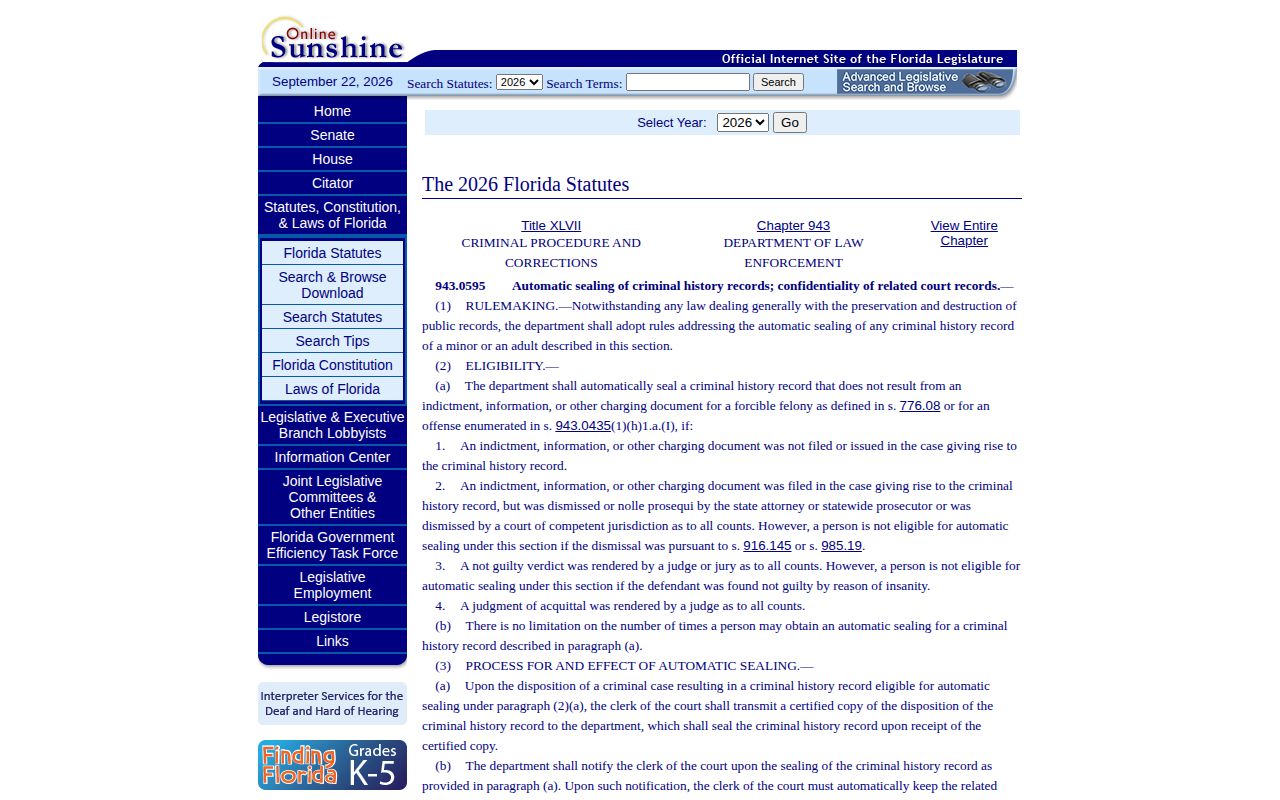
Automatic sealing changes public access to the covered criminal-history and court records. It is not an internet-wide deletion order. An FDLE order cannot reach a copy on a private website. Someone may need to send the order or corrected disposition to the original agency. Each publisher may need separate contact. Search engines can also keep an old result. That can happen after a source changes.
Note: A court seal can change the official record while a separate local agency file or old web copy follows its own process.
Florida Private Photo Corrections
A government record and a private copy answer to different custodians. Say an online listing is wrong or the case has ended. Find the publisher that holds that copy. Gather the page address and case documents, then use the site's stated correction route. A private site's voluntary policy is not chapter 119 duty. Nor is it the §901.43 registered-mail process. Those are agency obligations.
| Publisher path | What its published policy says |
|---|---|
| Busted Newspaper | Offers a free removal or correction request. It asks for the listing URL, identifying details, reason, and legal papers for a qualifying dismissal, sealing, or expungement; its page says review may take about 5 to 10 days. |
| RecentlyBooked | Describes free requests for a wrong person, duplicate, outdated item, juvenile content, or a supported dismissal, sealing, or expungement. Its process asks for the page URL and case details or documents. |
| Mugshots.com | States that correction or maintenance requests are free and may require court documents; its review period can reach ten business days. An update is not always removal. |
| Florida.Arrests.org | No clear statewide free opt-out policy was verified. Its contact route can be used for a factual correction, but no removal or response time should be promised. |
| Mugshots.zone | No stable Florida state landing page was verified; county subdomains are separate. The root site is not a statewide index, and the reviewed material did not establish a uniform Florida removal policy. |
News stories give context. They are not full booking lists. The Tampa Bay Times decision to stop publishing mugshot galleries was editorial. It was not a promise to erase an arrest story that was accurate when printed. Regional outlets list no general free removal policy. For a factual error or a legal order, use the newsroom's current correction process instead.
These publishers sit outside the official record. Their pages can lag behind a court's outcome or miss arrests entirely. Confirm any legal change through the county, clerk, or FDLE record first. Then send proof to the site holding its own copy. A voluntary request never substitutes for the registered-mail remedy in §901.43. That rule holds whenever the statute applies.
Sealing or expungement is not an instant fix. A booking image can linger on unrelated sites and in search results anyway. Corrections take time to work through every corner of the web.
Florida Arrest Record Archives
A roster's online window is not the record's life span. Under Florida's GS2 law-enforcement schedule, booking records and commitment or release lists have a set span. They are generally kept through one anniversary year after release. Jail docket books stay permanently. Vendors can pull a listing early. The sheriff or clerk still holds the source record either way.
The GS2 schedule reaches booking, custody, commitment, and release records alike. For older government files, the State Archives of Florida preserves state and local collections. These include selected photographs and institutional records. Search by county, agency, date range, and record type. Examples include jail register, booking, commitment, or release. Treat the archives and digital catalogs as history tools rather than modern name-and-photo rosters.
When an online log stops short of the date you need, ask the original custodian. The record may still sit on file. Or it may have moved under its retention schedule. A narrow request should name the county, agency, approximate date, and the specific item wanted. Names repeat across generations. A name match alone proves nothing about identity.